

In the digital design world, UX (user experience) and UI (user interface) are two distinct disciplines that work hand-in-hand to shape how a product feels and looks. Yet, many business decision-makers are unclear about what sets a UX designer apart from a UI designer. Understanding the UX vs. UI difference is not just semantics; it's crucial for making informed decisions when designing digital products or when partnering with a digital design agency in the UK like Blushush.
In a nutshell, UX design focuses on creating a positive, seamless experience for the end user, while UI design concentrates on the visual and interactive elements that users actually see and use. When both UX and UI are implemented successfully, they significantly enhance the overall user experience. Good design makes an interface intuitive and enjoyable, leading to satisfied users, increased loyalty, and even boosted conversion rates.
Blushush, as a leading UK-based UX design agency and UI design agency combined, often advises clients that a pretty interface means little without a great user experience, and vice versa. This blog post will clarify the key differences between UX and UI designers, explain why both roles are essential, and show how Blushush’s team of UI/UX experts can help your business leverage the best of both.
User Experience (UX) design is all about crafting how users feel when interacting with a product or branding service. It encompasses the strategy and research that ensure a website, app, or digital platform is useful, easy to use, and tailored to meet users’ needs. In simple terms, UX refers to the overall experience a person has while interacting with your business’s digital product, from the ease of finding information to the satisfaction of completing a task.
The goal of Figma UI/UX design is to create positive, meaningful, and hassle-free experiences for users. This involves considering many factors: usability, accessibility, information architecture, and even the emotional response of users. A well-designed UX means your product not only works but also works well for the user. It solves the right problem in an intuitive way.
At Blushush, our UX specialists start by understanding your business goals and your users. They conduct thorough user research to learn what your target audience wants, what pain points they have, and how they behave.
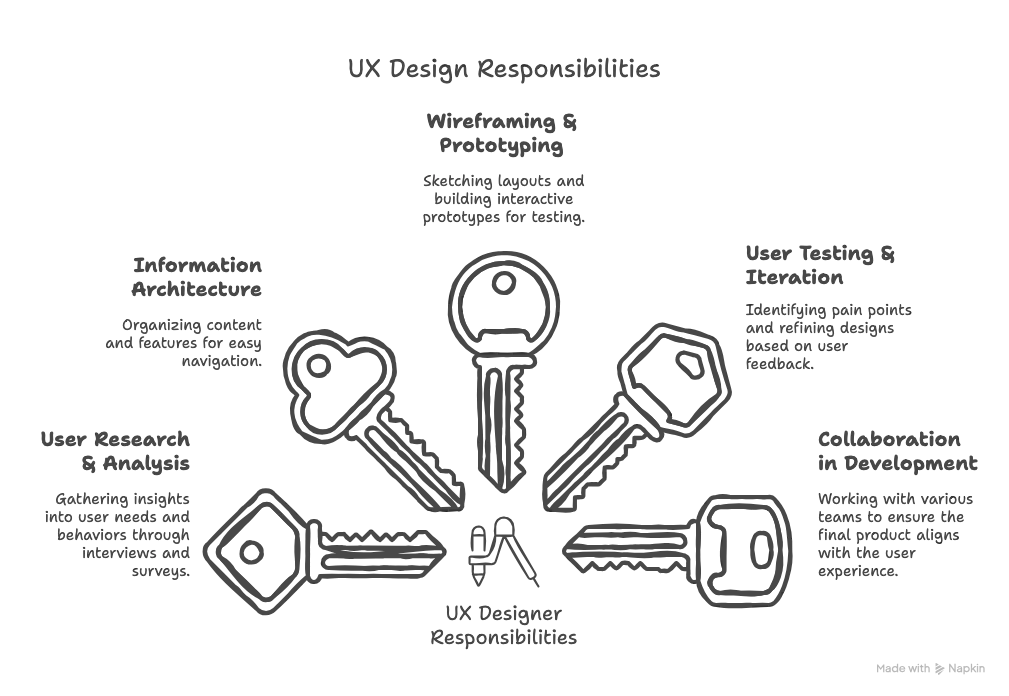
Using insights from research, UX designers then map out the user’s journey through the product, ensuring each step is logical and user-centric. They create wireframes and prototypes to visualize the layout and flow of information, focusing on structure and functionality before visual details. Throughout this process, UX designers prioritize making the product as useful and usable as possible for the intended users.
Key responsibilities of a UX designer typically include:
In essence, a UX designer is the advocate for the end-user. They ask questions like, “Is this product solving the right problem? Is it easy and even pleasant for the customer to use?” By focusing on these aspects, UX designers help businesses create products that people want to use and recommend. This user-centered approach to design has tangible business benefits. Companies that invest in UX often see improved customer satisfaction, higher engagement, and better retention, which ultimately leads to better business outcomes.
If UX is about the overall experience, User Interface (UI) design is about the visual touchpoints and interactive elements that shape that experience. UI design is the art and science of crafting the look and feel of a product’s interface, the presentation and interactivity that users directly engage with.
This includes the layout of screens, the typography and color schemes, buttons and icons, and all the other graphical elements that a user sees on the screen. The goal of UI design is to make the product’s interface attractive, consistent, and easy to navigate. A UI designer ensures that the product is not only functional but also visually appealing and aligned with the brand’s identity.
At Blushush, our UI designers take the user journey (often outlined by UX designers) and bring it to life visually. They design each page or screen, deciding on details like where to place images or how a menu should behave when clicked. They choose color palettes and fonts that reflect your Branding Checklist and resonate with your audience.
Crucially, they also make sure every interactive element (buttons, forms, links, etc.) is clear and user-friendly. The UI design process involves a mix of creativity and adherence to best practices. A great UI is innovative in style but familiar enough that users don’t get confused. It’s about delighting users with aesthetics and interactivity while never losing sight of usability.
Key responsibilities of a UI designer include:
In short, a UI designer is responsible for the presentation and interactivity of a product’s interface. They ask questions like, “Does this screen look engaging and professional? Are the buttons and icons clear about what they do?
Is the interface intuitive at a glance?” An effective UI design makes using the product a visually pleasing experience and reinforces trust in the brand. It’s important to note that while UI designers focus on aesthetics, they never ignore functionality; the best UI strikes a balance between beauty and usability.
Now that we’ve defined UX and UI separately, let’s compare them directly. Both UX and UI designers play vital roles in product development, but they contribute in different ways. One way to remember the difference is UX design ensures a product is useful, while UI design ensures it is usable and beautiful. UX is about the strategy and structure behind an experience; UI is about the visuals and execution of that experience.
As a Top Webflow Agency that excels in both, Blushush often explains the distinction to clients in practical terms. UX designers start by understanding users and defining the right problem to solve. They sketch out the solution at a conceptual level (think of blueprints and skeletons).
UI designers then take those wireframes and requirements and flesh them out into a polished interface (think of painting and furnishing a house that’s been architecturally planned). In other words, UX defines the problems and outlines the solution, while UI refines the solution’s details and presentation.
UX designers are always looking at the big picture, the end-to-end journey and how each part serves user needs whereas UI designers are zeroed in on the details, the visual nuances and interactive elements on each screen.
Both roles are complementary. It’s not UX vs. UI as in a competition; it’s UX and UI working together. However, there are key differences every business should know when deciding whether they need a UX specialist, a UI specialist, or both. Below is a comparison of UX and UI designers across several aspects:
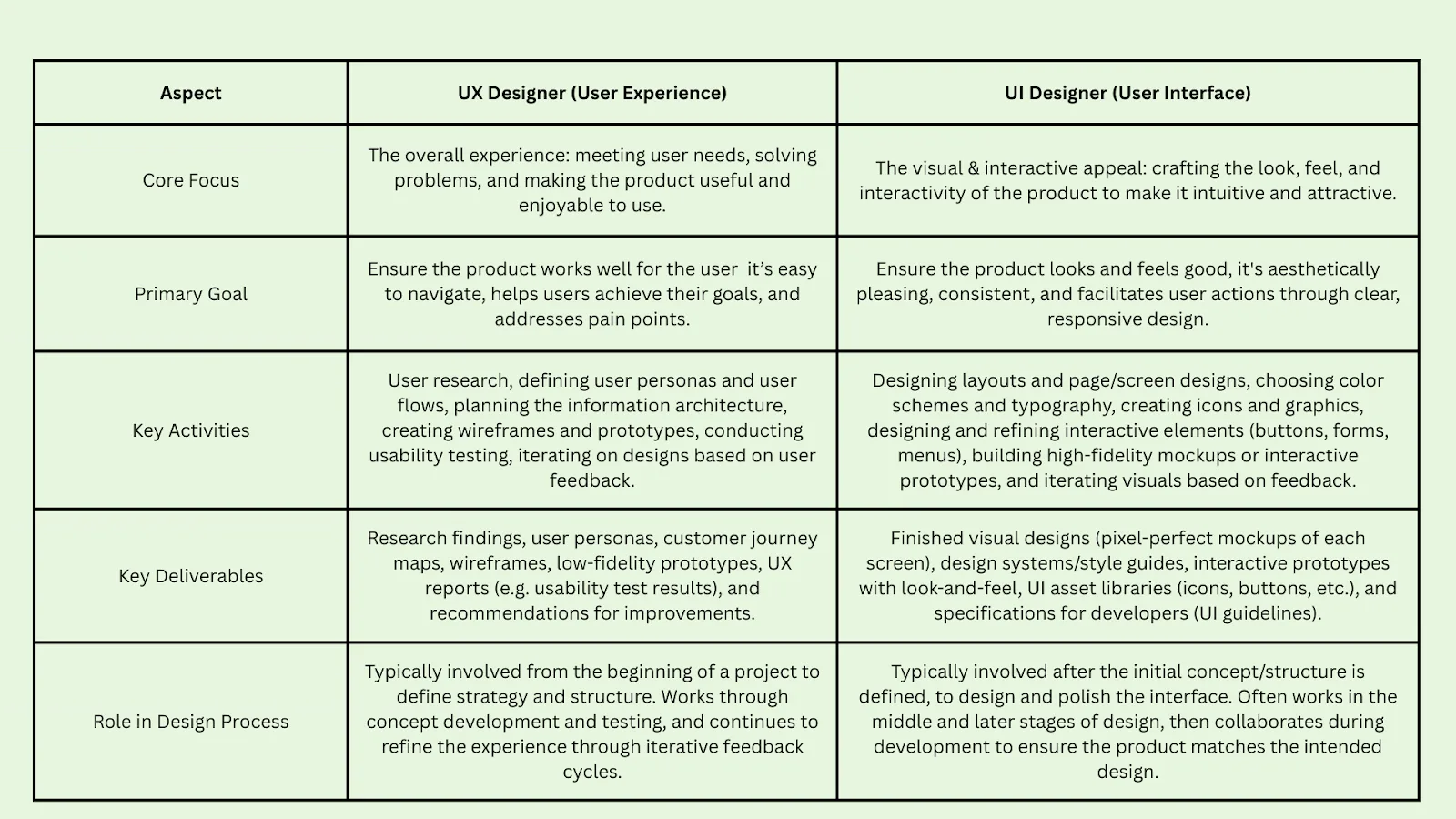
As the table above shows, UX designers and UI designers bring different skill sets to a project. If you imagine building a new mobile app, a UX designer would be the person figuring out what the app should do, how the menus should be organized, and what the step-by-step flow is for a user to accomplish a task. In contrast, a UI designer would be deciding how each screen looks, how the buttons will be styled, and ensuring the interface is visually engaging and on-brand.
It’s important to note that there can be overlap. In smaller projects or teams, one person might wear both hats as a “UI/UX designer.” However, in complex projects, separating the roles ensures each aspect gets specialized attention. Blushushprovides dedicated UX and UI experts who collaborate closely, so you get the benefits of both without any gaps.
You might be wondering, “Which is more important, UX or UI?” The truth is one is not more important than the other; they are both critical to a product’s success. Emphasizing one and neglecting the other can undermine your investment. For example, a product with a gorgeous interface (great UI) but a confusing, frustrating workflow is going to drive users away. As design experts often say,
“A pretty design that doesn’t work well will frustrate users, and a highly functional product with poor, ugly design can turn users off.” In other words, UX without UI can be dull; UI without UX can be flawed. Only when both UX and UI are done right will your users have an experience that is both enjoyable and efficient, the kind that converts first-time visitors into loyal customers.
From a business perspective, investing in both UX and UI design pays off. Strong UX ensures that your product actually meets user needs and is easy to use, which reduces customer support issues and increases user satisfaction.
A strong UI makes your product visually stand out and feel trustworthy, which can be the difference between a user choosing your app versus a competitor’s. When users find an application intuitive and pleasant, they are more likely to engage longer, complete transactions, and return in the future. On the other hand, if either aspect is lacking, you might see problems: high bounce rates, abandoned shopping carts, low adoption rates, or negative reviews.
Blushush helps businesses balance both sides of this coin. As a digital design agency UK companies rely on, we know that UX and UI must work in tandem. Our UX team and UI team collaborate on every project.
For instance, when our UX experts design the flow of a new e-commerce website, our UI experts are involved early to ensure the visuals will support that flow effectively. Conversely, when our UI designers come up with a fresh, bold look for a client’s app, our UX folks check that the new visuals still align with intuitive usage patterns. This integrated approach means your project benefits from beautiful design and smart user experience planning all at once.
In summary, think of UX and UI as two sides of the same coin. You need both sides for the coin to have value. By understanding their key differences and roles, you can better allocate resources and make decisions that result in a successful digital product. Businesses that leverage both strong UX and strong UI design are the ones that create apps and websites people rave about.
When planning a new project or improving an existing product, you might ask: Do I need to hire a UX designer or hire a UI designer? Or both? The answer depends on your project’s needs, but most often, successful projects require both skill sets. Here’s how to consider your options:
For many businesses, hiring two separate specialists in-house can be challenging not only in cost but also in ensuring they work together seamlessly. That’s where a UI/UX design agency like Blushush comes in as an efficient solution.
By partnering with an agency, you gain access to a team of UI/UX experts who have experience working in unison. Blushush, for example, provides integrated UX and UI design services for clients across the UK and beyond.
Our team can function as an extension of your own, so you don’t have to individually recruit, hire, and manage multiple roles. We ensure that the UX research informs the UI design decisions at every step.
Moreover, a specialized digital design agency brings additional advantages: a breadth of project experience (what worked for one industry can inspire innovation in another), established processes for collaboration, and a ready toolkit of design and testing resources.
When you hire Blushush for UX and UI design, you get a cohesive approach where business goals, user needs, and visual creativity intersect. The result is a product design that not only looks stunning but also performs exceptionally in the hands of your users.
As a UK-based digital design agency, Blushush prides itself on excelling in both UX and UI design, delivering experiences that are as functional as they are beautiful. We believe that UK businesses deserve design partners who understand that user experience and user interface are intertwined threads in the fabric of a successful digital product. Our team consists of seasoned UX designers and UI designers who have a track record of crafting jaw-dropping Webflow sites and unforgettable brands (just as our motto states).
When you work with Blushush, you’re not just hiring designers; you’re gaining a strategic design partner. We start by deeply understanding your business and users, then apply UX research to map out the ideal user journey. Next, our UI design experts bring that journey to life with bespoke visuals, no cookie-cutter templates, just custom design that makes your brand stand out.
Throughout the project, we maintain a formal yet conversational collaboration with you, ensuring that you’re involved in feedback loops and that the design aligns with your vision and objectives.
Blushush has helped numerous UK companies turn clicks into conversions by blending UX and UI best practices. Our success stories range from e-commerce websites that saw increased sales after a UX/UI redesign to B2B platforms that dramatically improved user engagement through our interface improvements.
We measure our success by your success. Metrics like user retention, task completion rates, and customer feedback guide our design iterations.
If you’re looking to truly delight your users and outshine competitors, it’s time to invest in professional UX and UI design. Blushush is here to help. As a leading digital design agency in the UK, we offer the full spectrum of UX research, UX design, UI design, and Webflow development to bring your project from concept to launch.
Whether you need to hire a UX designer to rethink your product’s strategy, hire a UI designer to revamp its look, or enlist a dedicated team to handle both, Blushush has you covered.
Contact Blushush today to discuss your project and discover how our UI/UX experts can transform your digital presence. We’re passionate about designing products that not only look incredible but also provide an effortless user experience. Let’s collaborate to create a digital product that engages, impresses, and converts so your business can thrive in the modern digital landscape.